SWIFT gpi: зачем банкам глобальная платежная инновация
 ИРИНА ЛИТОВЧЕНКО,
Head of Sales SWIFT&Service Bureau Division of ProFIX Company

До появления технологии SWIFT gpi каждый банк, участвующий в трансграничных платежах, мог обладать информацией, которая доступна только ему в момент нахождения платежа на его стороне, не зная общей картины цепочки и деталей обработки.
SWIFT gpi коренным образом меняет ситуацию и позволяет банкам-участникам SWIFT gpi получить информацию обо всей цепочке, обеспечивая отслеживание платежей в режиме реального времени. Это значит, что при отправке банк заранее знает, как его платеж будет отработан банками-партнерами по gpi. SWIFT gpi – это стандартизация процессов обработки банковских платежей на глобальном уровне.
В условиях стремительного развития технологий современного быстро меняющегося мира это особенно важно, так как все ожидают максимальной прозрачности процессов, в том числе при отправке и получении средств через SWIFT. Доступ к открытым данным, прозрачность и возможность быстрого реагирования и управления процессами – бесспорные преимущества SWIFT gpi.
В чем преимущества для банков и клиентов?
Представьте, что вы – компания или индивидуальное лицо, и вы ожидаете международный платеж. Вы только знаете, когда и какая сумма была вам отправлена. Но вы не знаете, когда деньги будут зачислены на ваш счет, был ли правильно сформирован платежный документ, не возникло ли у банка-посредника вопросов к предоставленным документам как основанию для отправки средств, а может быть, этот платеж был приостановлен на выяснение деталей с банком-отправителем. Вы не знаете также, какую комиссию спишут банки-посредники и какую итоговую сумму зачислят на ваш счет после выяснения деталей о платеже и его обработки посредниками. Ни банк-отправитель, ни банк-получатель не могли предоставить эту информацию своим клиентам ранее.
Преимущества SWIFT gpi
(кликните, чтобы увеличить изображение) 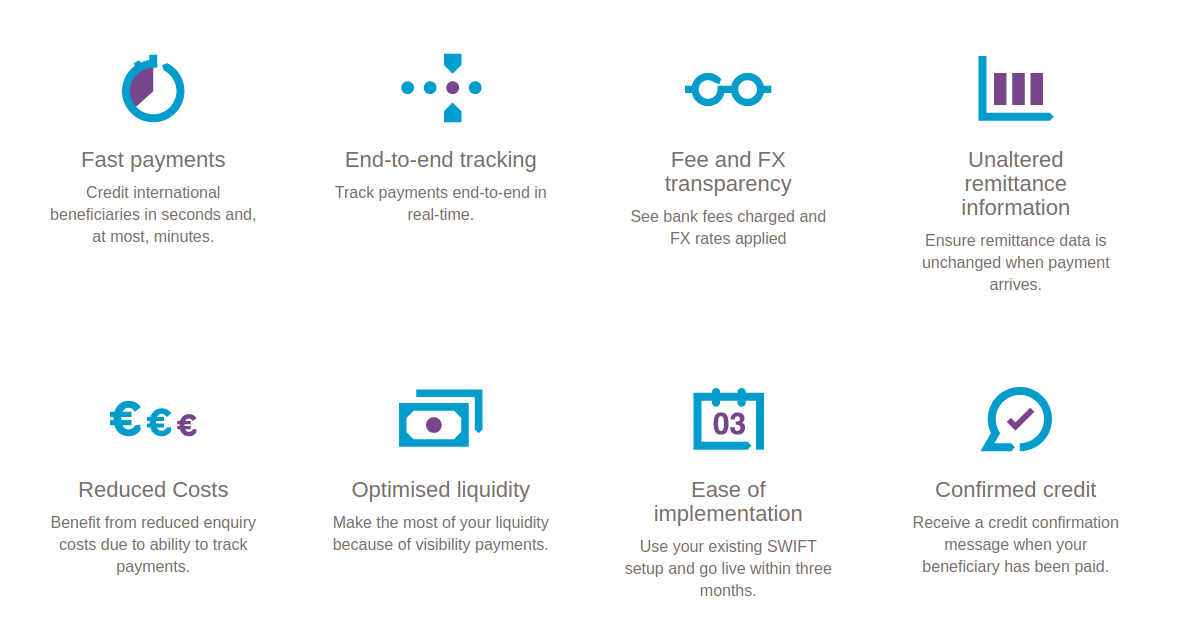
Теперь вместе с современной технологией в мире трансграничных платежей SWIFT gpi эта информация стала прозрачной, быстрой и доступной. SWIFT построил единую глобальную платформу, которая позволяет надстраивать новые инновационные сервисы, действующие в интересах конечных потребителей услуг. Благодаря новой логике обмена финансовыми сообщениями и новым правилам игры, банки становятся более эффективными – происходит изменение самого бизнеса. Мы с вами наблюдаем начало глобального процесса диджитализиции финансовых технологий.
Вопрос цены SWIFT gpi
Себестоимость самого SWIFT-сообщения для банка-пользователя не меняется. SWIFT не регулирует стоимость платежей для конечных пользователей, а банки самостоятельно устанавливают тарифы на предоставляемые услуги.
SWIFT gpi объединяет по всему миру банки, которые хотят предложить своим клиентам инновационный опыт трансграничных платежей и эффективно выстроить свою корпоративную клиентскую базу. Поэтому gpi-пользователи вкладывают средства и усилия во внедрение технологии SWIFT gpi и ее поддержку в банке. Кроме того, gpi-банки должны адаптировать свои внутренние процессы, чтобы соответствовать требованиям SWIFT gpi. В то же время, новая технология позволяет gpi-банкам сократить свои операционные расходы на обработку платежей (затраты на запросы банкам-корреспондентам и расследования снижаются в среднем на 50%), оптимизировать управление ликвидностью собственных средств и своих клиентов, а также понизить операционные риски и риски, связанные с ликвидностью.
Количество банков и транзакций по GPI
Количество банков-участников SWIFT gpi неуклонно растет. Сейчас к этой услуге присоединилось более 180 банков, способных использовать 450+ международных платежных коридоров, обмениваясь более 500 тыс gpi-платежей в день, а это сотни миллиардов долларов США ежедневно. SWIFT подходит к рубежу 40 миллионов платежей, отправленных на платформе SWIFT gpi. К ноябрю 2018 года эта цифра вырастет в несколько раз. Экспоненциальный рост gpi-трафика ожидается в связи с выходом около 100 новых банков в живой режим работы в SWIFT gpi, которые в данный момент находятся на стадии тестирования. Каждый день к SWIFT gpi присоединяются новые банки и открываются новые платёжные коридоры. Это невероятно масштабируемая технология.
SWIFT gpi в цифрах
(кликните, чтобы увеличить изображение)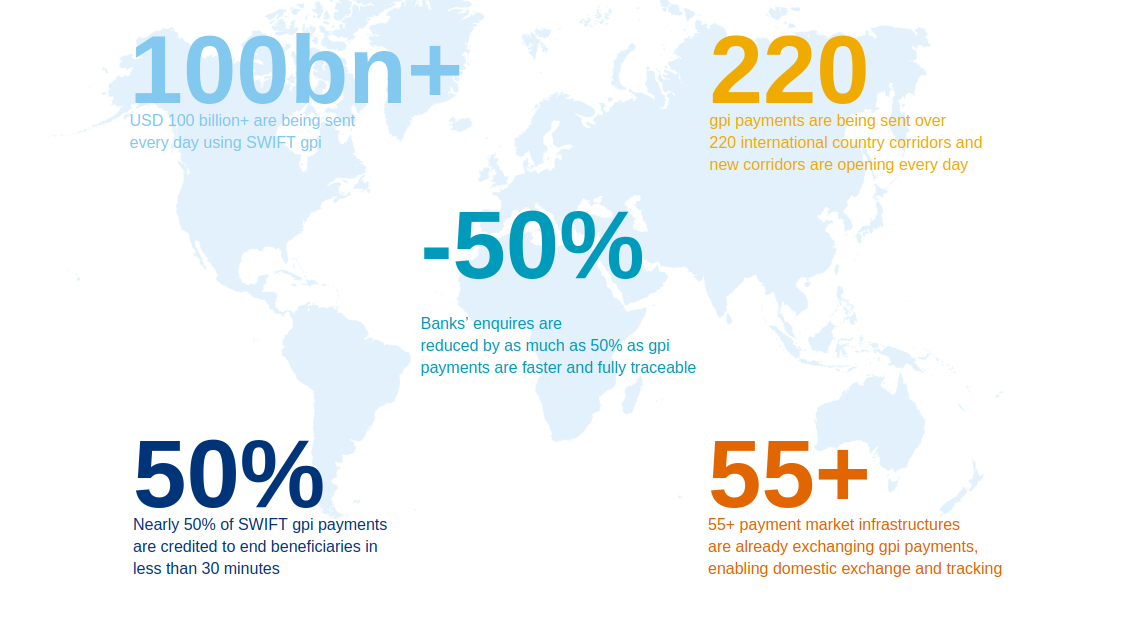
От отправителя к получателю: как работает GPI
Отправляя gpi-платеж, банк назначает уникальный код для транзакции. Этот код все банки-участники цепочки платежа передают неизменным. Таким образом, все вовлеченные стороны могут проконтролировать конкретный платеж в любой момент. С ноября этого года необходимость принимать уникальный код транзакции сообщений 1 и 2 категорий становится обязательной для всех пользователей SWIFT. Следовательно, все gpi-сообщения становятся прозрачными и возможными для отслеживания пользователям gpi, вне зависимости от того, проходит ли платеж по gpi-активным банкам или нет.
Мгновенная проверка статуса отправленных, полученных и находящихся в обработке платежей доступна благодаря сервису SWIFT Tracker, разработанному на основе облачных технологий.

Зная где находятся деньги и какая комиссия будет снята на каждом этапе обработки платежа, банки могут контролировать предоставление точной информации о зачислении денег на счета конечных получателей.
Также с помощью настройки фильтров SWIFT Tracker-а gpi-банки могут отслеживать входящие gpi-платежи, которые находятся в процессе поступления в банк.
Чтобы банки-участники SWIFTgpi могли чётко понимать схемы обработки gpi-платежей друг друга и своевременно обрабатывать gpi-платежи, между ними заключается мультиколлатеральное соглашение (SLA). Выполнение таких SLA банки могут отслеживать через аналитический инструмент gpi Observer.
Также банки-участники имеют доступ к справочнику gpi Directory, который помогает gpi-банкам выстроить наиболее эффективную цепочку платежа, исходя из присутствия gpi-банков в стране, валют, в которых они работают по SWIFTgpi, и их cut-off times (закрытие операционного времени).
Прозрачность платежей
Сама система увеличивает прозрачность платежей. Видимость всей цепочки осложняет редактирование платёжной инструкции на пути прохождения транзакции. Становится невозможным изменить данные по оригинатору и бенефициару, так как эти данные доступные с самого начала цепочки. Поэтому банки-корреспонденты, особенно в определенных регионах с высокой степенью риска, активно настаивают внедрять SWIFT gpi именно с точки зрения их комплаенс-рисков. Такая прозрачность процессов усложняет существующие практики отмывания денег. Кроме того, SWIFT gpi сделает доступной отправку дополнительных запрашиваемых платёжных документов посредством SWIFT Tracker в режиме реального времени, что также положительно отразится на комплаенс-проверках при обработке платежей.
SWIFT gpi в Украине
С Украиной как с регионом SWIFT gpi SWIFT начал работать только в 2018 и наблюдает активный интерес к сервису со стороны банков. Особое внимание связано с зависимостью украинских банков от международных корреспондентов и высокими аппетитами де-рискинга в украинской банковской системе.
Мы прогнозируем, что конкуренция за клиентов, в первую очередь корпоративного сектора, в скором времени изменит эту картину. Кроме того, уже к 2020 году SWIFT планирует сделать gpi новым обязательным стандартом для всех международных платежей.
Gpi for Corporates — How It Works

The g4c solution is based on the same principle as the gpi (global payment initiative) solution, namely the data exchange between banks on payment execution. Upon performing an action, the bank connected to gpi is obliged to transmit information about this action to the SWIFT tracking system, known as gpi tracker (It should also be noted that only banks included in gpi have access to the tracker). As a result, other participants in the payment chain, for example, the sending bank, see this and can follow the path of the payment. Therefore, the gpi tracker acts as an information hub that transfers information to connected banks.
Corporations, even those who have subscribed to gpi for corporates, do not have access to the tracker. For them, the role of an information hub is played by a gpi servicing bank that receives complete payment information from SWIFT. However, corporations still receive a significant amount of information such as when the payment was debited from the account of the servicing bank, when it arrived at the beneficiary’s bank, and when the money finally entered the recipient’s account. In addition, the corporation receives real-time information about unforeseen delays of the transaction processing. For example, a special status is provided if a bank in the payment chain delays the transaction for any reason, whether it be AML verification, absence of supporting documents, etc. Thus, the corporation can monitor the movement of its payment and take timely action in case of its delay.
Furthermore, the corporation will receive information about crediting funds to the recipient and about unforeseen delays even if the recipient’s bank is not connected to the gpi service. This is in part to a SWIFT project called universal confirmation, which states that all banks are obliged to send to gpi tracker confirmation of the enrollment (or delay in crediting) of received payments. Therefore, regardless of the beneficiary’s bank, the country where it is located, or its technical equipment (or lack thereof), the sender corporation connected to g4c will always know when the money actually arrived to the recipient.
Prior to g4c, when requesting payment information, a corporate would need to call or write to the servicing bank, which would then contact its correspondent bank, and so on until finally the request reaches the beneficiary’s bank. Furthermore, given the fact that all these actions are performed manually, and often in different time zones, you can imagine how many days it would take for the corporation to get information about its payment. Today, it is enough for the corporation to subscribe to SWIFT’s g4c service and install IntellectEU’s payLOCATOR software to be able to monitor payments and even share this information with counterparties, thanks to payLOCATOR’s trustline functionality that provides secure access for counterparties to view specified payments. Rather than going through back and forth communication with customer support teams, payLOCATOR can be simply installed and a trustline can be opened with specified counterparties. Now, both companies can receive information within g4c and monitor the transaction processing accordingly.
However, it should be noted that the gpi for corporates solution is not perfect in its current state as it has moments that could potentially play a small factor in reducing its effectiveness. We will talk about these moments, the causes of their occurrence and possible consequences, as well as ways to eliminate them, in the next publication.
If you have any other questions, please write them in the comments and we will answer!
What is SWIFT Global Payment Initiative? (GPI)
‘Global Payment Initiative’, also known by the acronym gpi, is the latest initiative launched by SWIFT to improve the customer-bank experience in the world of international payments.
Banking Circle will be confirming receipt of a payment back to SWIFT GPI BIC via MT199, therefore letting any GPI member linked to the payment know the status.
How will this help our Clients and their Customers?
Clients will know that any incoming or outgoing funds via SWIFT can be tracked, as each party in the payment trail has to confirm receipt back to the sending bank. This will reduce your clients payment queries, as the beneficiary will have upfront capability to track funds.
Tell me how this confirmation works?
On the back of each MT103 received, Banking Circle will send a free text SWIFT called a MT199. This must be sent within 2 days of receipt of the funds to BC.
The confirmation will include the following:
- status originator BIC
- amount
- currency
- date/time of either the credit to the beneficiary account, or rejection
Will Banking Circle be using SWIFT GPI?
Banking Circle are not SWIFT GPI enabled, but will be conforming to the Universal Confirmations requirements via a traditional MT199 to the SWIFT GPI BIC vs interacting with the GPI system.
A client can have access to a paid membership of GPI corporate, where they can view all their SWIFT instruction status.
What are the key features and advantages of using SWIFT gpi for cross-border payments?
Cross-border payments are essential for global trade and commerce, but they can also be complex, costly, and slow. Traditional payment methods rely on a network of correspondent banks that exchange messages and funds through the SWIFT system, but this can create challenges such as lack of transparency, traceability, and certainty. That’s why SWIFT launched its global payments innovation (gpi) initiative in 2017, aiming to improve the speed, security, and efficiency of cross-border payments. In this article, you’ll learn what SWIFT gpi is, how it works, and what are the key features and advantages of using it for your international transactions.
What is SWIFT gpi?
SWIFT gpi is a set of standards and rules that enable banks to offer faster, more transparent, and more reliable cross-border payments to their customers. SWIFT gpi leverages the existing SWIFT infrastructure and messaging system, but adds new features and functionalities that enhance the payment experience. SWIFT gpi is not a separate product or service, but rather a collaborative effort among participating banks that agree to follow the gpi principles and requirements.
How does SWIFT gpi work?
SWIFT gpi works by assigning a unique identifier (UETR) to each payment instruction, which allows the sender, the receiver, and the intermediary banks to track the status and details of the payment in real time. SWIFT gpi also provides a cloud-based service (the gpi tracker) that enables banks and their customers to access the information and data related to their payments, such as fees, exchange rates, and processing time. SWIFT gpi also facilitates the communication and resolution of any issues or inquiries that may arise during the payment process.
What are the key features of SWIFT gpi?
SWIFT gpi offers several features that improve the cross-border payment experience for both banks and their customers. These features include faster payments, transparency of fees, end-to-end tracking, and rich data. Faster payments ensure that most payments are credited to the beneficiary’s account within 24 hours, and many within minutes or even seconds. Additionally, SWIFT gpi provides clarity on the fees charged by each bank involved in the payment chain and the exchange rate applied, so that the sender and the receiver know exactly how much money is transferred and received. End-to-end tracking enables both parties to track the progress and status of their payment from start to finish, using the UETR and the gpi tracker. Furthermore, SWIFT gpi allows for exchanging additional information and data related to their payment such as invoices, contracts, or remittance details using the ISO 20022 standard. This enhances reconciliation and compliance of the payment as well as supports digitalization and automation of the payment process.
What are the advantages of using SWIFT gpi?
SWIFT gpi offers several advantages for both banks and their customers who engage in cross-border payments, such as improved customer satisfaction, reduced costs and risks , and a competitive edge. By providing faster, more transparent, and more reliable payments, customers experience increased loyalty, retention, and referrals. Banks can reduce the operational costs and risks associated with cross-border payments using the gpi tracker and the UETR. Additionally, SWIFT gpi gives banks a competitive edge in the global payments market by enabling them to offer a superior service to their customers and comply with regulatory and market expectations. Joining the gpi community also allows banks to benefit from the innovation and collaboration fostered by SWIFT gpi and leverage new technologies enabled by the platform.
How to get started with SWIFT gpi?
If you are interested in using SWIFT gpi for your cross-border payments, you need to check if your bank is a member of the gpi network. You can find the list of participating banks on the SWIFT website, or you can ask your bank directly. If your bank is a gpi member, you can request them to activate the gpi service for your account, and to provide you with the necessary tools and information to access the gpi features and benefits. If your bank is not a gpi member yet, you can encourage them to join the gpi initiative, or you can look for alternative banks that offer the gpi service.
Here’s what else to consider
This is a space to share examples, stories, or insights that don’t fit into any of the previous sections. What else would you like to add?