Стейблкоины: USDC и USDT. В чём разница и какой выбрать?
Стейблкоины – это криптовалюты, стоимость которых привязана к традиционным валютам, таким как доллар США. Они были созданы в ответ на волатильность криптовалют. Например, цена Bitcoin может колебаться на тысячи долларов в течение одного дня. Если вы платите в Bitcoin, то ваши траты могут расти или падать вместе с колебаниями курса. Для торговли или оплаты услуг это невыгодно.
На рынке существует множество стейблкоинов, но USDT (Tether) и USDC (USD Coin) доминируют. Они занимают более 70% рынка стейблкоинов. По данным CoinMarketCap, капитализация USDT составляет около 68 миллиардов долларов, в то время как USDC – около 30 миллиардов долларов.
USDT (Tether): Tether Limited утверждает, что каждый выпущенный токен обеспечен одним долларом США на их резервных счетах. Однако в 2019 году было выявлено, что обеспечение составляло только 74% от общего количества токенов.
USDC (USD Coin): В отличие от USDT, USDC регулярно проходит аудиты, и каждый токен на 100% обеспечен долларом США. Это делает его одним из самых надежных стейблкоинов на рынке.
USDT: Был создан в 2014 году и стал первым стейблкоином, который получил широкое распространение. Он был разработан для обеспечения стабильности на рынке криптовалют.
USDC: Запущен в 2018 году компаниями Circle и Coinbase. С момента запуска он стал одним из наиболее прозрачных и надежных стейблкоинов.
В 2021 году USDT сталкивался с проблемами обеспечения, что привело к временной отвязке от доллара. В то время как USDC в 2023 году столкнулся с проблемами из-за банкротства Silicon Valley Bank, где хранилась большая часть его резервов.
Оба стейблкоина широко используются для торговли на криптобиржах, международных переводов, оплаты товаров и услуг. Например, в странах с высокой инфляцией, таких как Венесуэла, люди используют USDT для сохранения своих сбережений.
Если вы ищете стейблкоин с длительной историей и большой капитализацией, USDT может быть вашим выбором. Однако, если вам важна прозрачность и регулирование, USDC представляет собой более надежный вариант.
Стейблкоины, такие как USDT и USDC, предоставляют инвесторам лучшее из обоих миров: стабильность фиатных валют и гибкость криптовалют. Однако важно тщательно изучить каждый стейблкоин перед инвестированием.
Мы собрали шпаргалку про USDT и USDC. Используйте её, чтобы объяснить кому-то что такое стейблкоины или решить, какой стейблкоин выбрать для своих задач.
Спасибо что дочитали до конца!
С вами была редакция канала «Хешрейт». Мы следим за новостями, аналитикой и публикуем материалы быстро. Например, узнали о победе Ripple (XRP) над SEC через 10 минут после оглашения результата. Через 20 минут после нашей новости XRP взлетел на 16%.
USDT vs USDC: Which one is the Better Investment?
Embarking on cryptocurrency trading, you’ll frequently encounter the term “stablecoin.” Moreover, you’ll discover several varieties, with USDT and USDC being two major contenders. Despite their similar roles, it’s important to understand the subtle differences between them.
What is a stablecoin?
A stablecoin is a cryptocurrency designed to have a stable price, generally pegged to a commodity or currency or even having its supply regulated by an algorithm. Most of them are based on fiat currency such as the US dollar. However, there are some others out there that are pegged to gold and other commodities. USDT and USDC are both coins that are pegged to the US dollar, for example.
The two stablecoins that we are looking at in this article are mainly used as a replacement for the US dollar on the blockchain. Still, it is worth noting that Tether also has a handful of other currencies and gold, while USDC (USD Coin) also has introduced the USDE, which is the same thing, only backed by euros.
What is USDT?

To take advantage of the use case scenarios of Tether, or USDT, you need to understand a handful of things about the coin before you put money into it.
What is Tether, and how does it work?
Tether tokens are assets used on the blockchain that behave like other digital currencies but are pegged to real-world currencies on a one-to-one basis. These tokens are referred to as “stablecoins” because they maintain their value without much fluctuation. Offering stabilitymakes transactions easier between parties.
Advantages of USDT
To begin with, Tether is by far the largest stablecoin in the world, so it has a significant advantage because it is accepted in so many different places. It offers the stability and simplicity of fiat currencies coupled with blockchain technology, and you can earn a yield on it like a savings account. While anything pegged to fiat currency offers an easy way to transact, Tether has the advantage of being among the most-trusted stablecoins.
The Disadvantages of USDT
Tether have not made a significant attempt to show their inner workings to the public. There have been several issues waiting for an accurate accounting and forensic investigation into their holdings. There have also been accusations that Tether has been used to manipulate the price of Bitcoin or that it has been used to launder money for criminals. Furthermore, Tether is not divisible, which limits its functionality.
What is USDС?

Looking at the USDC stablecoin, you will spot many similarities to Tether, and quite frankly, it is used in the same capacity. However, there are some nuances that you should probably be aware of.
What is USDC, and how does it work?
US Dollar Coin (USDC)is a stablecoin that functions like Tether, with a few minor differences. That being said, it is pegged to the US dollar, allowing for simplicity of transactions on the blockchain. USDT and USDC are both used quite extensively in this manner.
Advantages of USDС
USDC stablecoin has a couple of advantages, not the least of which is the ease with which you can transact in US dollars on the blockchain. It offers reliable value, pegged 1:1 to the US dollar. You can also earn a yield on it, just like you can with Tether. Furthermore, Circle, the company that issues USDC, has a longer history of transparency and regulatory compliance than Tether, its primary competitor.
Disadvantages of USDС
There are, of course, some disadvantages to USDC. For example, fees for withdrawing from exchanges can be high, as it is not as widely used as Tether. Furthermore, it is based on the Ethereum network, so you must be cautious. Also, although USDC is widely accepted, Tether is accepted at more venues.
The difference between USDT vs USDC
While both of these coins serve similar functions, there are some differences between USDT and USDC that you should be aware of. Regardless, you will find that they both suit various blockchain needs quite well.
Stability
Both of these stablecoins have a history of stability. That’s precisely what they are built to do. Tether did drop down to $0.96 briefly at one point during the TerraUSD crash but was quickly corrected as traders took advantage of arbitrage opportunities.
That being said, it’s probably worth noting that Circle has a longer history of transparency than Tether does, so one would assume that in a true financial crisis, it might be USDC that fares better. USDT and USDC have both been stable overall, but crypto is still a new endeavour.
Volume
Tether has much more volume than USDC. The daily trading volume as of late 2022 for Tether is roughly $36 billion a day. By contrast, USDC trades about $3 billion a day. That being said, both USDT and USDC have plenty of liquidity.
Blockchain
Both of these coins are available on multiple blockchains. Ethereum can handle both, but Tether is currently hosted on a few more. In the next section, there is a chart that lists all available blockchains for each coin as of late 2022.
USDT vs. USDС: Comparison
USDT and USDC are similar in their use overall, but the following table gives you a high-level view of the differences and similarities between both Tether and USD Coin. While they serve similar functions, they are used in different places and have other market capitalisation characteristics.
| Feature | USDC | USDT |
| Developer | Circle | Tether |
| Type of stablecoin | ERC-20 | ERC-20 |
| Market Cap (Oct ’22) | $68.45 billion | $44.5 billion |
| Backing | A mix of cash and bonds | Cash and short-dated US Treasuries |
| Trading Volume | $36 billion daily | $3 billion daily |
| Blockchain | Ethereum, Hedera, Algorand, Avalanche, Solana, Stellar, and Tron. | Algorand, Ethereum, EOS, Liquid Network, Omni, Tron, Bitcoin Cash, and Solana. |
Why invest in stablecoins?
There are a handful of reasons why you might be interested in owning or investing in stablecoins, and depending on your situation, you may hold them for a short time or a longer period. For example, suppose you are living in an economy that is suffering from massive amounts of inflation. In that case, you may use them to keep your savings the equivalent of the US dollar, thereby avoiding some of the punishment that inflation can bring. USDT and USDC can often be used for this function in some places worldwide, such as Argentina and Venezuela.
It’s also possible that traders will hold them to earn interest. There are a lot of different places where you can make interest on stablecoins, acting very much like a traditional savings account, although generally with higher interest rates.
Finally, the most common use is for trading. As these cryptocurrencies live on the blockchain, buying other cryptos with one of these stablecoins is much quicker than trying to go through the traditional banking system. USDT and USDC both offer plenty of liquidity for trading needs.
USDС vs USDT: Which one is the better investment?
The first question you need to ask yourself is, what blockchain do you plan to operate with? If one coin cannot work on the blockchain of your choice, but the other one can, it makes the choice easy. Both of these coins are reliable, but it must be noted that USDC is much more transparent about what it holds to maintain its currency peg. They only hold US Treasuries and US dollars. On the other hand, Tether has been less than transparent about everything it owns, and auditors have been frustrated by trying to “peek behind the curtain.” Because of this, if you are looking to protect your currency from inflation or perhaps even store it somewhere securely, you may be better off using USDC longer term.
Conclusion
Stablecoins offer plenty of uses and are often built atop Ethereum, although there are other networks that can be used as well. If you choose to use one of those networks, then the choice will be made for you as to which token you should be using.
One thing that traders do not like it’s the fact that Tether has been so opaque with some of its “cash equivalents” that back USDT tokens This has been a major problem, and there’s even been legal action taken against Tether in New York State. On the other hand, Tether has handled millions upon millions of transactions and is by far the biggest stablecoin out there. It is widely accepted and has had no real issues making transactions.
A lot of what you will be looking at is simply facilitating trades, which both do quite easily or trying to earn a yield on the currency. Both offer plenty of opportunities, which at this point are relatively interchangeable regarding their functionality. In other words, if you are looking to trade a currency pair, you will need to see what is available and which coin you should use. On the other hand, if you want to earn yield, explore the options at PrimeXBT and see which coin you will get a better return on due to the supply and demand of lendable tokens. USDT and USDC both fluctuate with yield potential like most other investment products.
Is USDT the same as USDC?
In a sense, they are both digital representations of the US dollar on the blockchain. It is worth noting that the Tether version also can come in a few other fiat currencies. For those who prefer transparency, USDC is the superior choice, but USDT is chosen for liquidity and investing in higher volume crypto.
Is USDC better than USDT?
It depends on what you are using it for. That being said, USDC is considered much safer because Centre makes a significant effort to comply with audits and governmental regulations and keeps fully backed reserves.
Can I send USDT to USDC?
They run on two different platforms; therefore, the only way to transfer Tether into USDC is to convert via a trading exchange. Because of this, USDT and USDC run independently.
Which is safer: USDC or Tether?
While both are considered very safe, there are many questions about Tether and what the “cash equivalents” add up to. There have been issues getting the company to be less opaque, while Centre, the company behind USDC, has been extraordinarily transparent. Because of this, USDC is probably the safer option. USDT and USDC have performed well so far, but there is always the concern that the underlying backing could fail.
USDC vs USDT
USDC (USD Coin) and USDT (Tether) are stablecoins. A stablecoin is a crypto asset designed to maintain a stable value relative to a specific asset or currency, in this case, the U.S. dollar.
While they both serve the same fundamental purpose, there is a key difference. USDC is issued by Centre Consortium and is valued for its transparency, whereas USDT is issued by Tether Limited and is preferred for its liquidity and higher trading volume.
In this article, we will take a look at these differences in more detail and help you figure out which stablecoin may be better suited for your needs.
What are stablecoins?
Stablecoins are digital assets designed to maintain a stable value by pegging their price to a specific asset or currency, often a fiat currency like the U.S. dollar. The primary objective of stablecoins is to provide users with the benefits of cryptocurrencies, such as fast and borderless transactions, while minimizing the risk associated with price fluctuations.
Unlike traditional cryptocurrencies like Bitcoin or Ethereum, stablecoins seek to bridge the gap between digital and traditional financial systems and combine the benefits of fiat currencies and digital assets. They aim to address some of the key challenges faced by the crypto industry, such as price volatility and lack of widespread acceptance. By maintaining a stable value, stablecoins offer a more reliable medium of exchange, store of value, and unit of account.
Are stablecoins the same as fiat currencies?
Stablecoins differ from fiat in a few key ways. First and foremost, stablecoins are digital assets that exist solely in the digital realm, while fiat currency is physical cash issued by a central bank. Secondly, stablecoins are typically backed by a reserve asset, such as a specific fiat currency or a commodity, aiming to maintain a stable value compared to the asset it is pegged to. In contrast, fiat currency's value is determined by the trust and confidence placed in the issuing central bank. Stablecoins also offer the advantage of being easily transmissible and tradable on blockchain networks, providing instant and low-cost transactions across borders, whereas fiat currency transfers can be slower and more costly, especially for international transactions. Additionally, while fiat currency is subject to the monetary policies implemented by central banks, stablecoins are not subject to such influence, increasing their appeal as a decentralized alternative.
What types of stablecoins exist?
Stablecoins can be categorized into three main types: fiat-backed, crypto-backed, and algorithmic. Fiat-backed stablecoins derive their value from a reserve of fiat currency held by a trusted third-party custodian. Each unit of the stablecoin is backed by an equivalent amount of the underlying reserve currency. Crypto-backed stablecoins, on the other hand, are collateralized by a reserve of other cryptocurrencies, typically held in smart contracts. Lastly, algorithmic stablecoins rely on complex algorithms to adjust the supply and demand of the stablecoin in response to market fluctuations, striving to maintain a peg to the target asset or currency.
The growing popularity of stablecoins is driven by their potential for use cases such as remittances, international payments, and decentralized finance (DeFi) applications. They offer a middle ground between fiat currencies and cryptocurrencies, combining the benefits of both worlds. As the cryptocurrency ecosystem continues to evolve, the stablecoin market is likely to play a pivotal role in fostering mainstream adoption and building a bridge between traditional finance and the decentralized future.
What is USD Coin (USDC)?
USD Coin or USDC is a stablecoin that was launched in 2018 as a joint effort between Coinbase and Circle, two prominent players in the cryptocurrency industry. The primary objective of USDC is to provide users with a stablecoin pegged to the U.S. dollar, allowing them to transact and store value without being exposed to the price fluctuations commonly associated with other cryptocurrencies.

USDC started on the Ethereum blockchain as an ERC-20 token, which means it is built on a widely adopted and established platform. This makes USDC compatible with many decentralized finance protocols and wallets, offering users a seamless experience and easy integration into various platforms. Eventually, USDC branched out to other blockchain networks.
One of the key factors that differentiates USDC is its commitment to transparency and regulatory compliance. Unlike some other stablecoins, USDC maintains a fully reserved structure, where each token is backed by an equivalent amount of U.S. dollars held in a bank account and frequently audited by reputable third-party firms. This ensures that there is a direct correlation between the number of USDC tokens in circulation and the amount of U.S. dollars in reserve and the price remains fixed.
USDC has gained widespread adoption and usage across the crypto ecosystem. It is frequently utilized for cryptocurrency exchange, as well as for remittances, peer-to-peer transactions, and as a means of storing value in stable assets. As a regulated and fully backed stablecoin, USDC offers users the benefits of cryptocurrencies, such as speed, security, and global accessibility, while minimizing exposure to volatility.
What is Tether (USDT)?
Tether (USDT) was launched in 2014, it was one of the first stablecoins to enter the market. Created by the company Tether Limited, a Hong Kong-registered company, USDT was designed to provide stability and liquidity by pegging its value to the U.S. dollar at a 1:1 ratio. This means that for every USDT token in circulation, there should be an equivalent amount of U.S. dollars held in reserve.
USDT operates on multiple blockchain platforms, including Ethereum, Tron, and others. This allows for greater accessibility and interoperability across different networks and platforms. The multi-platform approach also enables faster transactions and lower fees, making USDT a popular choice for traders, investors, and users in the cryptocurrency ecosystem.
One of the distinguishing features of USDT is its high liquidity and broad acceptance. It is supported by numerous cryptocurrency exchanges and used as a base trading pair for a wide range of major exchanges. This widespread adoption and availability contribute to USDT's stability and reliability as a medium of exchange and store of value.
However, it is important to note that USDT has faced scrutiny and controversy over the years regarding its transparency and level of backing. While Tether Limited claims that every USDT token is fully backed by an equivalent amount of U.S. dollars in reserve, there have been concerns raised about the company's ability to provide proper audits and transparency into its reserves. This has led to speculation and debates about whether USDT's backing is indeed as secure as claimed.
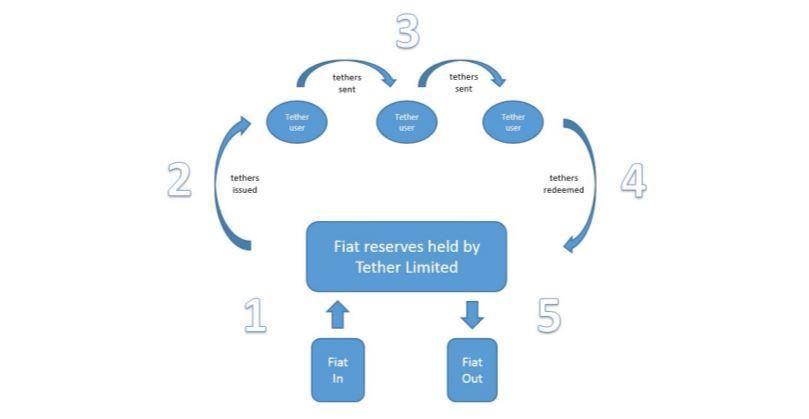
Tether Flow of Funds infographic. Source: Tether whitepaper.
Despite the controversies, USDT continues to play a significant role in the cryptocurrency market, providing users with a stable and widely accepted digital asset that bridges the gap between traditional finance and the world of cryptocurrencies.
USDC vs USDT: similarities
As mentioned above, both USDC and USDT stablecoins are designed to provide stability and reliability in the cryptocurrency market. They share several similarities in terms of their purpose and use cases.
Firstly, both USDC and USDT are pegged to the value of the U.S. dollar. This means that the value of each token is meant to remain stable and equivalent to one U.S. dollar. This pegging mechanism allows users to transact and store value in a digital asset that represents a fiat currency without being exposed to the volatility commonly associated with other crypto assets.
Both USDC and USDT tokens are widely accepted and used across various crypto exchanges and trading platforms. They are commonly utilized as a base pair for trading with other cryptocurrencies and as a means of storing value during market fluctuations. The widespread adoption of both stablecoins contributes to their liquidity and utility in the cryptocurrency market.
USDC vs USDT: differences
Despite the numerous similarities in terms of their purpose and use cases, USDC and USDT also have significant differences between the two.
One key aspect of the "USDT vs USDC" debate lies in their issuing entities and level of transparency. USDC is issued by Coinbase and Circle (both are part of Centre Consortium) and follows a fully reserved model, where each token is backed 1:1 by an equivalent amount of U.S. dollars held in reserve. This transparent approach ensures that there is a direct correlation between the number of USDC tokens in circulation and the underlying fiat currency.
On the other hand, USDT is issued by Tether Limited and has faced scrutiny regarding its reserves and transparency. While USDT claims to be backed 1:1 by U.S. dollars, there has been controversy around the level of backing and the lack of transparency regarding audits.
Another significant difference is the blockchain platforms they operate on.
USDC started off on the Ethereum blockchain as an ERC-20 token, but eventually branched out to other blockchains, like ALGO, ARB, SOL, and others. USDT also exists on multiple blockchain networks. Supported blockchains for USDT are Bitcoin (Omni & Liquid protocol), Ethereum, TRON, EOS, Algorand, Solana, and Bitcoin Cash (SLP). This difference in blockchain platforms may impact factors such as transaction speed and network fees.
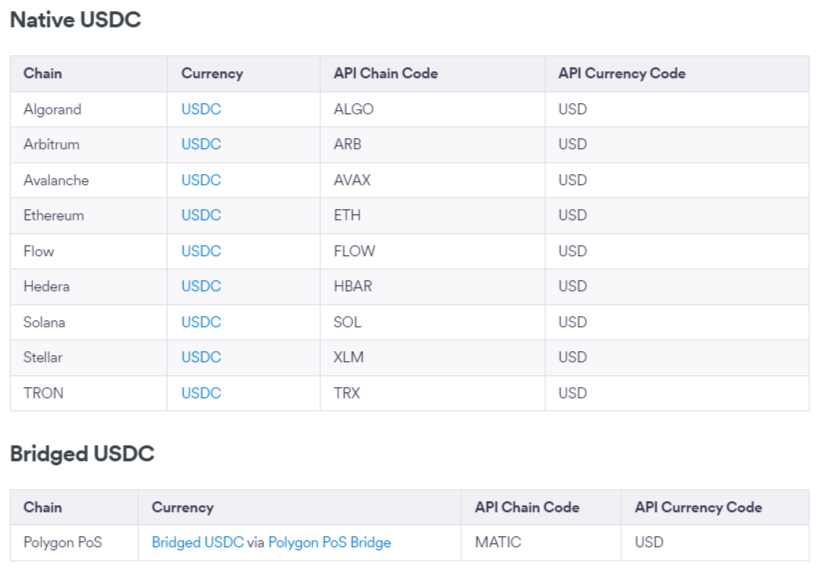
Furthermore, while both stablecoins enjoy widespread adoption and usage in the cryptocurrency ecosystem, USDT has a longer history and a higher trading volume, making it more widely accepted and available on numerous cryptocurrency exchanges.
USDC vs USDT: Challenges
USD coin depegged
Despite USD Coin's generally positive reputation on the stablecoin market, it is not immune to risks and challenges. In particular, during the collapse of Silicon Valley Bank, which held more than $3 billion worth of USD Coin, the stablecoin faced significant pressure and temporarily deviated from its peg. Its value dropped as low as $0.86, causing concerns among users and market participants.
The bank collapses also affected Signature Bank, leading to the closure of its product Signet, which facilitated the redemption of USDC stablecoins for the US dollar. This event further raised doubts about the resilience of both Circle, the company behind USD Coin, and the stablecoin itself in times of crisis.
Fortunately, USD Coin managed to navigate through this challenging period and subsequently regained its peg. The stablecoin's value recovered shortly after the initial deviation, demonstrating its ability to withstand market turbulence and restore stability.
The mystery of the USDT stablecoins' reserves
On the other hand, the USDT ecosystem has also faced considerable controversy and scrutiny since its inception. Concerns have been raised regarding the extent to which reserves of fiat currencies adequately back the circulating supply of USDT tokens in the market.
The situation escalated when financial regulators and law enforcement investigated Tether, leading to the discovery that its reserves were insufficient. It was revealed that corporate loans and bad debt were utilized to support their backing reserves. Additionally, Tether's sister company, Bitfinex, was involved in the misplacement of $850 million worth of client and corporate funds, and Tether's reserves were utilized to cover up this imbalance. These actions were carried out without informing Tether's investors. In 2021, Tether faced consequences for its actions and paid an $18 million fine.
These instances provide only a glimpse of Tether's complicated history. However, it's worth noting that the stablecoin giant appears to have taken steps toward greater transparency. Tether has increased its commitment to transparency and now offers daily updates on the status of its reserves. This enhanced transparency aims to build trust and provide stakeholders with a clearer understanding of Tether's operations.
USDC vs USDT: What's the better investment?
Atomic Wallet will not provide financial or investment advice. The answer will always depend on what type of investor you are and your preferences when it comes to potential risks and goals.
Market cap and DeFi
Both USDT and USDC are both popular stablecoins of course, but Tether is currently the largest stablecoin in terms of market capitalization and daily trading volume. Its widespread acceptance and use in the cryptocurrency ecosystem make it a popular choice for investors.
USDT has also been in circulation since 2014 and has maintained its peg to the US dollar throughout that time. The stablecoin has demonstrated stability and reliability in maintaining its value, even during volatile periods in the crypto market.
When it comes to the popularity of USDT in the crypto space, Tether is widely supported by cryptocurrency exchanges and trading platforms. Its availability across various exchanges ensures that investors can easily buy, sell, and trade USDT without facing significant hurdles. This accessibility further enhances its liquidity and makes it a preferred option for traders and investors.
Since USDT is present on a bigger number of blockchain networks, it's utilized in decentralized finance protocols, lending platforms, and as collateral for borrowing, providing opportunities for investors to participate in these emerging markets.
Regulatory transparency and stability
USD Coin (USDC) is issued by Circle and Coinbase, two well-established and regulated platforms in the cryptocurrency industry. This collaboration and support from reputable organizations signify the widespread acceptance of USDC within the crypto community. Circle, Coinbase, and other prominent industry players that are owned by Centre Consortium are compliant with regulatory requirements, making USDC a more transparent option compared to other USD stablecoins. Regular audits and transparent reserve reports enhance trust and provide investors with a sense of security.
USD Coin is started off as an ERC-20 token on Ethereum blockchain which offers some technical advantages to USDC stablecoin. These include its robust infrastructure, network effect, and smart contract capabilities. Ethereum is one of the most widely adopted blockchain platforms, with a vast ecosystem of decentralized applications (DApps) and DeFi protocols. By using USDC on the Ethereum network, investors can take advantage of the diverse opportunities available within this vibrant ecosystem. It is also worth remembering that
Buy USD stablecoins in Atomic Wallet
If you decided to invest in USDT, USDC, or any other USD-backed token, we've got good news for you. Atomic Wallet allows you to purchase crypto assets with fiat currency and keep them in your USDT wallet & USDC wallet in a fully decentralized manner without any additional charges while also earning cashback! You can also send crypto dollars in and out of your wallet without any additional charges.
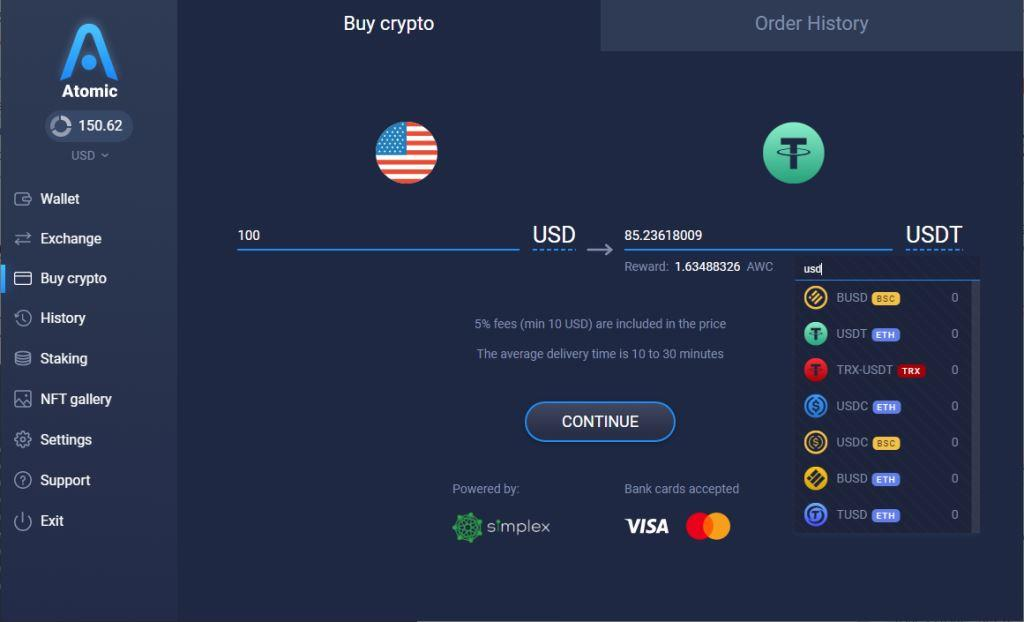
If you decide to proceed with this option, you will be required to provide certain information, including your name and billing details. Additionally, you will need to complete a verification process, which is conducted by our trusted partners in order to ensure the prevention of fraud and money laundering. Payments can be made using either a debit card or a credit card.
In summary
At the end of the day, both USDT and USDC offer unique advantages and reasons for investment. USDT's market dominance and widespread acceptance make it a preferred choice for traders, while USDC's regulatory transparency and collaboration with major industry players provide a sense of security for investors. Ultimately, the decision to invest in either stablecoin depends on individual preferences, risk appetite, and investment goals.
Сходства и отличия существующих стейблкоинов USDT, USDC, USDS, TUSD и BUDS
В статье раскроем суть, виды и преимущества стейблкоинов , сравним самые популярные из них, а также расскажем, чем отличаются токены Tether (OMNI, ERC-20, TRC-20) .
Что такое “стейблкоин”

Стейблкоин — это группа криптова лют , стоимость которых привязана к базовому активу, их назначение — имитация свойств фиатных валют. Стейблкоины — это мост между криптоактивами и реальным миром.
Концепция стейблкоинов — предложить крипторынку, в противовес волатильным криптовалютам (биткоину, эфиру), цифровой актив, стоимость которого будет стабильной и неизменной.
Так в чем разница между равно привязанными к цене доллара США USDT и более молодыми проектами USDC, USDS, TUSD, BUSD?
И чем они отличаются от USD и классических криптовалют ?
Плюсы и минусы стейблкоинов
Стейблкоины заняли прочную позицию на рынке криптовалют и, похоже, не собираются ее отдавать. Они применяются в качестве инструментов входа в крипторынок и выхода в фиат (если биржи не предлагают фиатных пар).
Кроме того, в условиях нестабильности рынка, служат надежным “цифровым фиксатором” стоимости активов, могут применяться для хеджирования портфелей инвесторами.
В них есть потенциал для использования на рынке займов и кредитования.
Вместе с тем, стейблкоины обладают преимуществом традиционных криптовалют — возможностью проводить прозрачные, безопасные и быстрые транзакции на блокчейне. В этом их отличие от USD и прочих фиатных валют.
Аналитики предупреждают, что регуляторы будут стремиться полностью взять под контроль нишу “электронных денег на блокчейне” и ликвидировать конкуренцию на контролируемом финансовом рынке, посредством внедрения CBDC и запрета частных проектов (яркий пример — Китай).
Из минусов стейблкоинов можно отметить наличие централизованного эмитента (в большинстве случаев), гарантирующего обеспечение; риск падения курса базового фиата (например, доллара США); относительную новизну технологии.
Виды стейблкоинов
Стейблкоины по способу обеспечения делятся на несколько видов:
- Фиатно-обеспеченные (коины, курс которых привязан 1:1 к фиатной валюте, их количество должно соответствовать зарезервированной сумме фиатных средств на счету у эмитента, что призвано гарантировать вывод коинов в фиат в любое время)
- Крипто-обеспеченные (коины, выпущенные под залог криптовалюты, которую пользователи блокируют в смарт-контракте . Для возврата залога требуется вернуть необходимое количество коинов + комиссию)
- Алгоритмические (их стабильность обеспечивается некими алгоритмами и смарт-контрактами , которые регулируют выпуск коинов в ответ на спрос и колебание цен на рынке).
В статье мы рассмотрим фиатно-обеспеченные стейблкоины , цена которых привязана к доллару США в соотношении 1:1. Такие стейблкоины еще называют токенизированным фиатом.
Их главная черта — централизованный эмитент, ответственный за их обеспечение реальными деньгами на счетах компании (или третьего лица, связанного юридическими обязательствами).
USDT

Tethet (USDT) — стейблкоин , выпущенный компанией Tether Limited в 2015 году.
Несмотря на наличие связи Tether Limited с криптобиржей Bitfinex и подозрения в предоставлении ложной информации о полном обеспечении токенов долларами США, USDT сегодня — самый “старый” и популярный стейблкоин с рыночной капитализацией около $40 млрд. Купить USDT можно практически на любой крипто платформе, в т.ч. в Trustee Plus.
Обеспечение: по заявлению Tether Limited, каждый Tether- токен всегда на 100% обеспечен резервами: фиатной валютой и ее эквивалентами, и иногда другими активами, включая дебиторскую задолженность по кредитам, выданным Tether третьим лицам, в т.ч. аффилированным компаниям.
Разработчики утверждают, что публикуют отчеты о резервах ежедневно и эти резервы превышают стоимость выпущенных токенов . У сообщества эти заявления вызывают обоснованное недоверие.
- компании (для удобного и понятного ценообразования и расчетов, для сокращения операционных расходов и времени на переводы в USDT, в отличие от фиатного USD );
- биржи и обменники (как альтернативу фиату для ввода и вывода средств, для установки фиатного баланса между биржами, безопасного оперирования клиентскими средствами);
- физлица/трейдеры (для беспрепятственного перемещения валюты между биржами и кошельками , безрискового хранения, улучшения торговых стратегий).
USDC
USD Coin (USDC) — это совместный проект компаний Circle и криптобиpжи Coinbase; стейблкоин , выпущенный в 2018 году. Управляющая компания — консорциум Centre.
На 2021 год рыночная капитализация USDC — более $ 10 млрд.
Обеспечение: USDC позиционируется как полностью обеспеченный актив с резервом в виде фиата и краткосрочных казначейских облигаций США. По заверению Circle, резервный фонд проходит ежемесячный аудит 5 топовых бухгалтерских компаний США, включая Grant Thornton LLP, и отчеты публикуются на сайте.
В надежности обеспечения разработчики видят основную разницу между USDC и USDT .
Главная цель проекта, согласно официальному сайту — обезопасить пользователей от рисков волатильности, способствовать созданию открытой всемирной финансовой системы.
USDC изначально был создан на блокчейне Ethereum по стандарту ERC-20, однако позднее был выпущен еще на 2 блокчейнах.
USDS
Stably USD (USDS) — стейблкоин , созданный компанией Stably Corporation (команда банкиров и инженеров-программистов Amazon) в 2018 году.
Рыночная капитализация — около $700 тыс.
Обеспечение: по утверждению разработчиков , полностью обеспечен долларами США, которые хранятся на застрахованном FDIC трастовом счете. Управляющая компания и администратор токена — Prime Trust, государственная трастовая компанией в штате Невада.
Компания заявляет, что состояние резервного фонда подлежит ежемесячному аудиту компанией Cohen & Co.
Применения: денежные переводы и платежи, безопасное хранение, кредитование, трейдинг.
TUSD

TrueUSD (TUSD) — стейблкоин , проект платформы TrustToken, занимающейся токенизацией реальных активов. Запущен в 2018 году.
Курс TUSD, аналогично предыдущим, приравнен к курсу доллара США в соотношении 1:1. В чем отличие TUSD от USDT ? Рыночная капитализация монеты TrueUSD по состоянию на 2021 год — более $300 млн (против $40 млрд Tether).
Обеспечение: По утверждению разработчиков, монеты полностью обеспечены соответствующим количеством долларов США на эскроу-счетах партнеров, а сам проект соответствует нормативным требованиям и проходит систематический независимый аудит аудиторской компанией Armanino.
Применение: хранение активов, трейдинг, переводы и расчеты, как стартовая монета для простого выхода на крипторынок.
Доступны две версии TUSD:
- токен ERC-20 на Ethereum (TUSD)
- токен BEP-20 на Binance Chain (TUSDB).
BUDS
BUDS — это стейблкоин , выпущенный платформой Binance в партнерстве с платформой Paxos. В этом проекте Paxos выполняет кастодиальные услуги и выступает эмитентом BUSD.
По информации Binance, стейблкоин одобрен Управлением финансовых услуг штата Нью-Йорк (NYDFS)
Обеспечение: Paxos заверяет , что 100% коинов обеспечены реальными долларами на счетах FDIC-застрахованных банков США, а для проверки состояния счетов, на которых хранится резерв для обеспечения стейблкоинов , компания привлекла аудиторскую компанию Withum.
Отчеты о состоянии счетов, обеспечивающих стабильность BUDS, в отличие от USDT , публикуются на сайте Paxos ежемесячно.
Рыночная капитализация — более $3 млрд.
Применение: биржевая торговля, кредитование, хеджирование крипто-активов от волатильности, расчеты, платежи.
Сравнительная таблица
Теперь сведем в таблицу ключевые характеристики стейблкоинов .
Все рассмотренные стейблкоины приравнены к курсу доллара в соотношении 1:1, все заявляют о стопроцентном обеспечении и регулярном аудите состояния резервных счетов и предполагают примерно одинаковые форматы применения.
Спрос на монеты , выраженный через рыночную капитализацию (по сути, количество монет в обращении) демонстрирует разный, но все же растущий уровень доверия сообщества к стейблкоинам.
Как полагают аналитики , это стимулирует повышение внимания к этим инструментам со стороны регуляторов. Вместе с тем, возрастание интереса к крипте будет лишь подогревать спрос на стейблкоины .
Tether и его токены

Самым востребованным стейблкоином на сегодняшний день остается Tether (USDT). И причина не только в его “возрасте”, но и в широком применении на многих платформах.
USDT размещен на самых крупных блокчейнах: Биткойн (Omni, Liquid), Ethereum, Tron, Binance Chain, Algorand и представлен в соответствующих стандартах токена . Рассмотрим подробнее, чем отличаются OMNI, ERC-20, TRC-20 — самые популярные токены Tether.
Токены — это блокчейн-активы, которые имеют определенную ценность и могут использоваться в сети как криптовалюты . Отличие их от традиционных криптовалют в том, что они функционируют внутри определенного блокчейна. Т.е. токены одного стандарта можно отправить только на адрес соответствующей сети. Для перехода в другую сеть необходимо, по сути, осуществлять их обмен.
Стандарт (OMNI, ERC-20, TRC-20 и другие) — это техническое руководство, спецификация, общий набор правил, которым необходимо следовать при создании токена , чтобы он корректно функционировал внутри платформы. Стандарты существенно облегчают работу разработчикам.
Например, для создания токена ERC-20 (фактически, смарт-контракта на блокчейне Ethereum) достаточно описать 6 обязательных функций и 3 опциональных.
При обмене USDT одного стандарта на другой, курс не будет соответствовать 1:1. При этом комиссия оплачивается в валюте сети, в которой выпущены имеющиеся у вас токены .
ВНИМАНИЕ! Для отправки токенов ERC20, в том числе USDT ERC20, нужен ETH, для отправки токенов USDT Omni нужен BTC, для отправки токенов TRC20, в том числе и USDT TRC20, нужен TRX. При отправке токенов нативная монета нужна для оплаты комиссии сети.
Tether OMNI
Изначально USDT был запущен на блокчейне Bitcoin (стандарт OMNI), но ввиду растущего спроса, для удобства пользователей его запустили и на других платформах.
OMNI — это открытый протокол, который является надстройкой над блокчейном Bitcoin, позволяет создавать цифровые активы, смарт-контракты и децентрализованные p2p биржи.
Преимущество токенов стандарта OMNI — надежная и устойчивая сеть, совместимость со всеми биржами и кошельками , поддерживающими этот стандарт (а таких реально много).
Недостатки — низкая скорость транзакций и высокие комиссии, что в целом характерно для блокчейна Bitcoin.
Отчасти они стали стимулом запуска токена на других платформах.
Tether ERC-20
В 2018 году USDT был запущен в сети Ethereum как токен стандарта ERC-20. На тот момент скорость обработки транзакций на блокчейне Ethereum была существенно выше, чем у блокчейна Bitcoin, а размер комиссий — ниже. В этом основное отличие USDT ERC-20 от OMNI .
Токены стали использоваться в любых смарт-контрактах и децентрализованных приложениях сети Ethereum.
Tether TRC-20
В 2019 году, когда нагрузка внутри сети Ethereum возросла, в размер комиссии начал постепенно приближаться к уровню биткоина, Tether начал функционировать в сети Tron.
Токены созданы по стандарту TRC-20, аналогичному и совместимому с ERC-20. Это позволяет использовать токен во всех смарт-контрактах и dApps экосистемы Tron, а также кошельках и биржах, поддерживающих стандарт ERC-20.
Преимуществом и основным отличием Tether TRC-20 от ERC-20 являются еще более быстрые транзакции и низкие комиссии, по сравнению с Ethereum (1 цент против 12-15 долларов).
СОВЕТ: благодаря системе Smart Swap, в кошельке Trustee Wallet обменять один токен Tether на другой можно по самому выгодному курсу. Сервис поддерживает Tether OMNI, ERC-20, TRC-20.
Итог
Спрос на стейблкоины несколько последних лет заметно растет и эта тенденция пока сохранит актуальность. Стоит ожидать повышения рыночной капитализации существующих стабильных валют и появление новых.
Дело в их преимуществах. Они удобны для расчетов, понятны для финансовых организаций, условно безопасны для долгосрочного хранения цифровых активов, приемлемы для хеджирования рисков в условиях волатильности традиционных криптовалют .
По большому счету, выбор того или иного стейблкоина зависит от доверия сообщества к его эмитенту и гарантиям обеспеченности. На сегодня самым востребованным остается стейблкоин USDT, функционирующий на большом количестве платформ в разных стандартах.